When a company uses an AI assistant to interview applicants, a fair question follows: what happens to their data? Candidate data privacy is more than a legal detail. It is a matter of trust between the company and the people who apply, and a regulatory responsibility in the Kingdom.
This article sets out what is confirmed about how Sabbar and Saud handle data, and marks what you should ask the team directly before relying on it.
What you will learn
- What data a job seeker shares on Sabbar.
- What is confirmed about data protection and Saud's automated processing.
- Who sees what: photo, video and contact details.
- Your company's responsibilities, and questions to ask first.
What is candidate data privacy?
Candidate data privacy is the protection of the personal information an applicant provides, their name, contact details, CV and what they say in an interview, and its use for hiring only.
In Saudi Arabia this area is governed by personal data protection rules overseen by the Saudi Data and AI Authority (SDAIA). Any organisation collecting applicants' data is responsible for handling it in line with those rules.
What is confirmed about how Saud handles data?
What is confirmed is that the privacy notice published on Sabbar's website covers Saud's automated processing. In other words, the use of Saud to rate and interview applicants is stated in the privacy notice users can read.
Beyond that, details such as retention periods or storage locations have not been published in a form we can state here as fact. If your company's policies need them, ask Sabbar's team directly. For an introduction, read What Is Saud by Sabbar?.
Does the applicant know they are talking to AI?
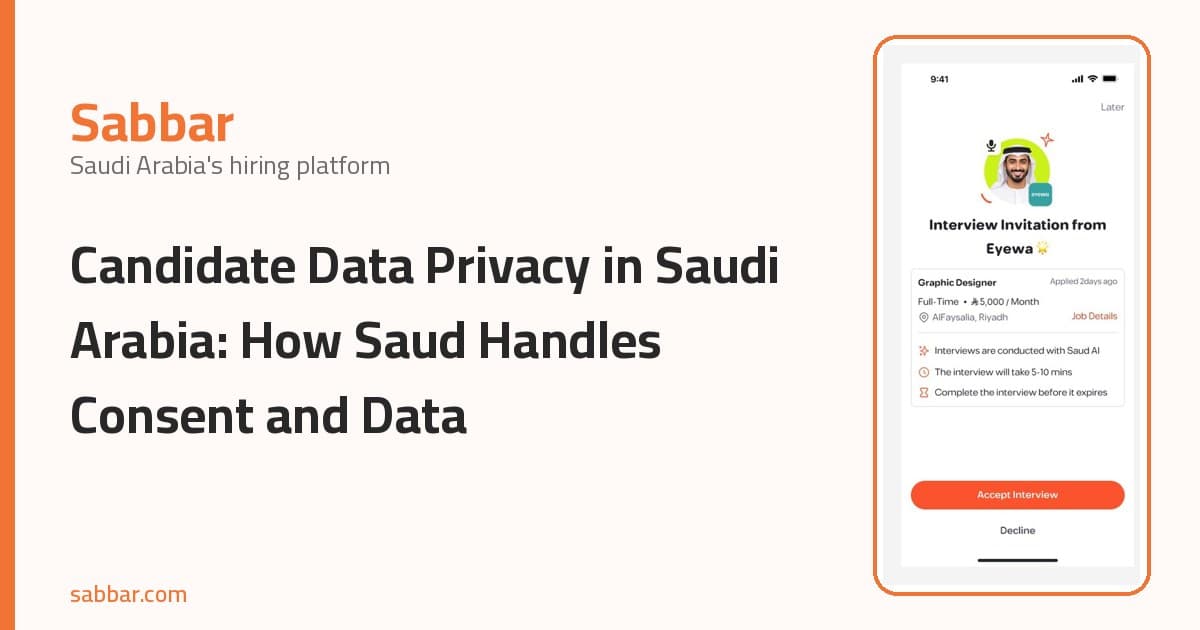
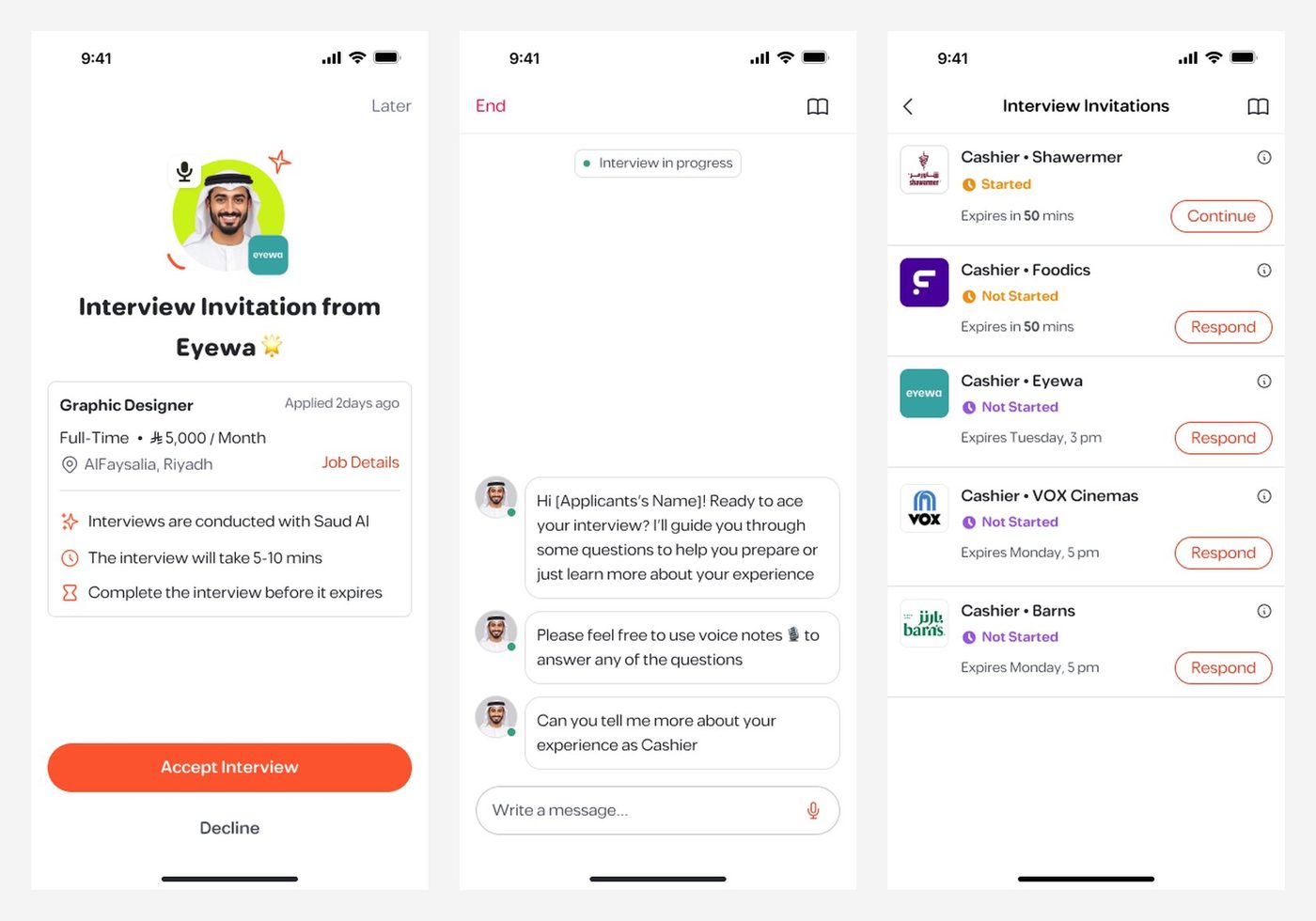
Yes. The transparency is in the invitation itself. The interview invitation tells the job seeker three things.
- The interview is conducted with Saud, the AI assistant.
- It is short.
- It must be completed before it expires.
The job seeker has clear options: accept, postpone or decline. Taking part is the applicant's decision.
Privacy questions specific to your company? Book a Saud demo and put them to the team before any commitment.

Sabbar is Saudi Arabia's leading local hiring platform
The go-to place for job seekers and employers across every sector in the Kingdom, with more than 1.5 million job seekers and thousands of companies
Get started with Sabbar today!
Who sees a job seeker's data on Sabbar?
Sabbar sets who sees what through clear rules in the product.
Photo and introductory video
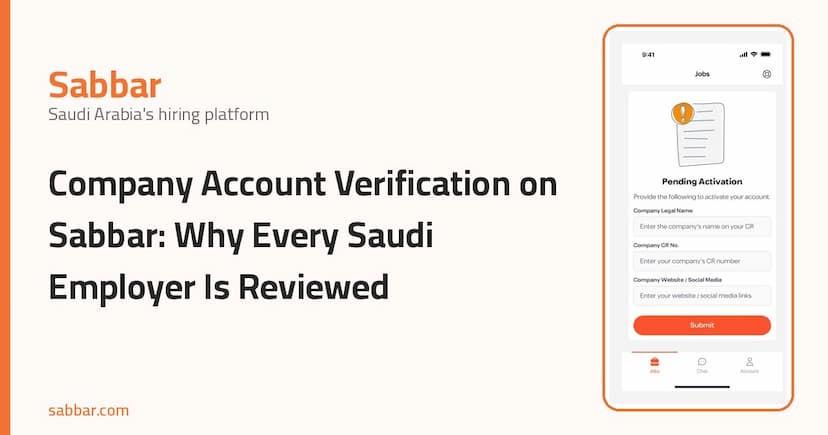
Only verified employers can see them, meaning companies whose accounts Sabbar has reviewed. Both are optional.
Contact details
Mobile number and email are shown to a company only after it unlocks the profile using a paid plan. The job seeker is notified when their CV is unlocked.
A CV shared outside Sabbar
When the CV is shared as a link or PDF, it shows the city but not the district, and the birth year but not the full date.
The job seeker's view of a company
The private feedback card asking about their experience with a company is never shown to that company.
What control does the job seeker have?
Job seekers have direct controls in their app.
- Deleting the introductory video: at any time. The app says it outright: you own your data, and your decision is respected.
- Editing the CV: every section can be changed or removed.
- Choosing the sharing language and method.
- Turning off notifications.
- Deleting the account: from Settings, with a reason and a confirmation code.
What does your team see of Saud's results?
Your team sees what it needs for the decision, inside the company account.
- The fit verdict and its reason.
- Saud Notes: a summary, matching points and unmatched points.
- The full transcript.
- The CV and attachments.
Users on the account are unlimited, as Recruitment Manager or Recruiter. It is your responsibility to add only people who need access.
What are your company's responsibilities?
Using a platform does not shift responsibility away from you. Seven basic practices:
- Purpose: use applicants' data for hiring only.
- Minimum: do not ask for documents you do not need at this stage.
- Access: give it to people who actually work on hiring.
- No copying: do not save videos or CVs outside the platform without need.
- Criteria: keep screening criteria and questions tied to the job.
- Human review: the final decision belongs to a person.
- Legal counsel: review your policies with a data protection specialist.
How do you avoid discrimination in screening criteria?
Avoid it by keeping requirements professional and in their fields.
- The system highlights phrases in a description that break MHRSD rules, such as age, gender or nationality limits, for you to review before publishing.
- Interview questions focus on experience, availability and duties.
- Saud's rating comes with a written reason, so you can review and challenge it.
How screening works is covered in AI CV screening in Saudi Arabia.
8 questions to ask before using any AI in hiring
- Does the privacy notice cover automated processing?
- Does the applicant know they are dealing with an AI assistant?
- Can the applicant decline or postpone?
- Who inside my company sees the interview results?
- Is the final decision human?
- Can I read the transcript and the reason behind the rating?
- How long is data kept, and where is it stored?
- How does an applicant request deletion of their data?
For the first six, the answers for Sabbar are set out in this article. Put the last two to Sabbar's team to get a written answer that fits your company's policies.
Why does privacy matter for attracting candidates?
It matters because a candidate who trusts the process shares more and completes the interview. A platform that explains who sees their photo, and makes them feel they own their data, gets more people adding an introductory video and accepting interviews, which gives your company better candidates.
For the wider context, read AI in HR in Saudi Arabia.
Need written answers for your legal team? Talk to the Saud team and request the privacy details you need.
An illustrative example: internal rules on one page
Many companies have no written rule on applicant data at all. This illustrates what a mid-sized business might agree on. It is not legal wording.
- Who has access: the hiring team and the branch manager for that role only.
- Where it is kept: in the company account on the platform, not on staff phones or chat groups.
- What we ask for, and when: the CV at application, and official documents only after a job offer.
- What we do with those not hired: we do not share their data with anyone else, and we do not contact them for anything other than hiring.
- When someone leaves the team: they are removed from the account's users the day they leave.
- Who is responsible: one named person who answers any data question.
One page signed by everyone involved in hiring beats a long policy nobody reads. Show it to your legal adviser before adopting it.
Everyday situations: what to do and what to avoid
Privacy is tested in small things that happen every day. These are illustrative situations.
- A branch manager asks for a candidate's CV on WhatsApp: add them as a user on the company account so they see it there, instead of sending the file.
- A colleague from another department asks about an applicant they know: do not share the assessment or interview result outside the hiring team.
- You want to market to a candidate who was not hired: the data was collected for hiring, so do not use it for another purpose without consent.
- A screenshot of an applicant profile in the work group: avoid it. An image spreads and cannot be taken back.
- A recruiter resigned: remove their access to the account immediately.
How to answer a candidate's questions about their data
A candidate who asks about their data is an aware candidate, and your answer is part of your company's image. Prepare clear answers.
- "Who will see my CV?": the hiring team and the direct manager for the role.
- "Is the interview with a person?": the first interview is with Saud, the AI assistant, and the invitation says so. The final interview is with our team.
- "Who makes the decision?": the hiring team. Saud provides an assessment and an explanation only.
- "Can I skip the photo or video?": yes, both are optional.
- "What about my data on the platform?": the privacy notice is published on Sabbar's website, and for any request about your account, contact Sabbar support from the app.
Do not promise a candidate something you do not know. If you are unsure, say you will check and come back to them.
Train your team in half an hour
Written rules are not enough if the people applying them do not know them. A short session whenever someone joins the hiring team covers the basics.
- What data we handle and why it is sensitive.
- Where we work: inside the company account only.
- What is not allowed: sharing in groups, screenshots, and use for anything other than hiring.
- What to do after a mistake: tell the responsible person immediately rather than hiding it.
- Examples from our own work: real situations that happened in the company and how to handle them.
Common mistakes in handling candidate data
- Assuming the platform is responsible for everything: what your company does with data once it sees it is your responsibility.
- Adding users who do not need access: every extra account is an extra door.
- Asking every applicant for official documents: ask only those who reach the offer stage.
- Keeping copies in scattered places: emails, phones and printed papers.
- Not knowing the law: the Personal Data Protection Law applies to your company, so review your obligations with your legal adviser.
Hire with AI without losing your candidates' trust
Saud introduces himself to the applicant, taking part is the applicant's choice, and the results are shown to your team only. Book a demo and ask about every detail that matters to your company's policies.
Summary
Candidate data privacy with Saud rests on what is clear: a privacy notice covering automated processing, an invitation that tells applicants they are meeting an AI assistant, and photos and videos only verified employers can see. Anything further your company needs, request from the team directly.
A few more quick questions
Does Sabbar's privacy notice cover Saud?
Yes. The privacy notice covers Saud's automated processing.
Can an applicant decline a Saud interview?
Yes. They can decline or postpone it.
Who sees an applicant's video?
Verified employers only.
Can job seekers delete their data?
They can delete their video at any time and delete their account from Settings.
Where do I find data retention details?
Request them from Sabbar's team directly, and review the privacy notice published on the website.