Shortlisting candidates is the point where hiring turns from collecting applications into making a decision. Out of two hundred applicants you need the five or ten worth interviewing. Getting there by hand takes days of reading and calling.
Saud, Sabbar's AI hiring assistant, prepares that shortlist for you. This article explains how he builds it, what comes with each candidate, and how to review it quickly and confidently.
What you will learn
- What a shortlist is and why it matters.
- The stages an applicant passes through to reach it.
- The information attached to each candidate.
- A practical way to review the list and decide.
What is shortlisting candidates?
Shortlisting candidates means selecting a small group of applicants who passed initial screening and deserve the final interview. It is the line between "everyone who applied" and "the people we will meet".
A good shortlist means fewer interviews and a faster decision. A weak one means many interviews with nothing to show for them.
How does Saud prepare the shortlist?
Saud prepares the shortlist through three stages that every applicant passes through.
Stage one: matching
Saud compares the applicant's data with the job's requirements and rates them Good Fit or Close Fit with a one-line reason, such as relevant experience or a short commute. This stage is covered in AI CV screening in Saudi Arabia.
Stage two: the first interview
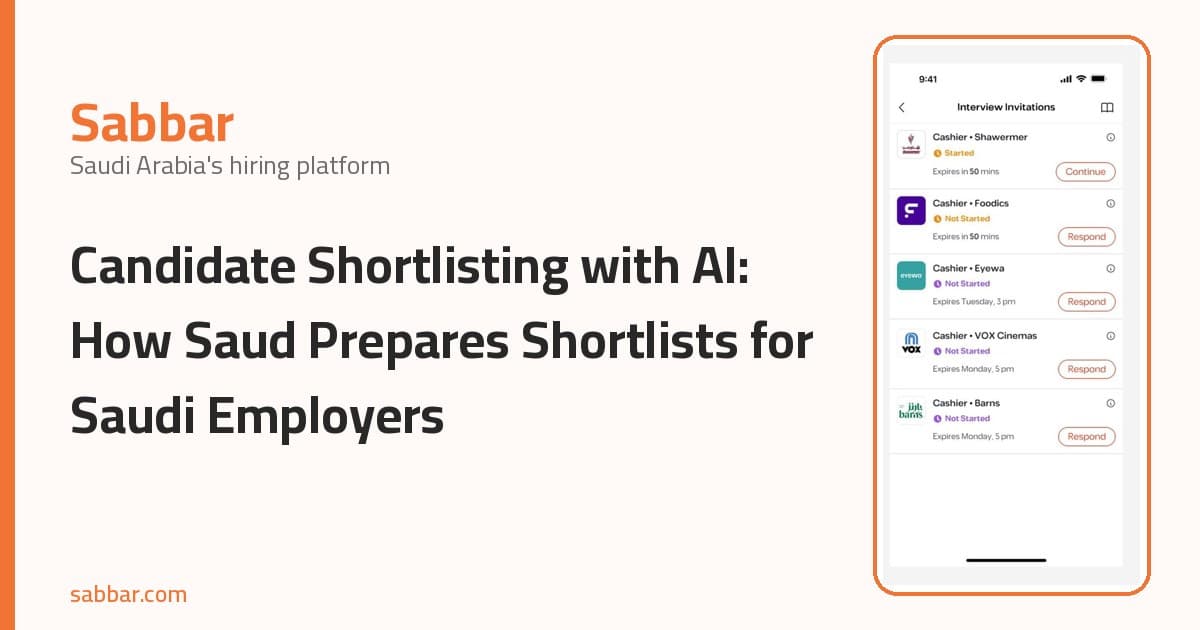
Saud interviews applicants on WhatsApp by text or voice, asking about experience, availability and what matters for the job. This stage is available in the Premium and Premium Plus plans.
Stage three: verdict and notes
After the interview Saud gives his verdict, Good Fit, Close Fit or Not Fit, and writes Saud Notes. The best-rated applicants are the raw material for your shortlist.
See a real shortlist before you decide. Book a Saud demo and we will show you the outcome on a role similar to yours.

Sabbar is Saudi Arabia's leading local hiring platform
The go-to place for job seekers and employers across every sector in the Kingdom, with more than 1.5 million job seekers and thousands of companies
Get started with Sabbar today!
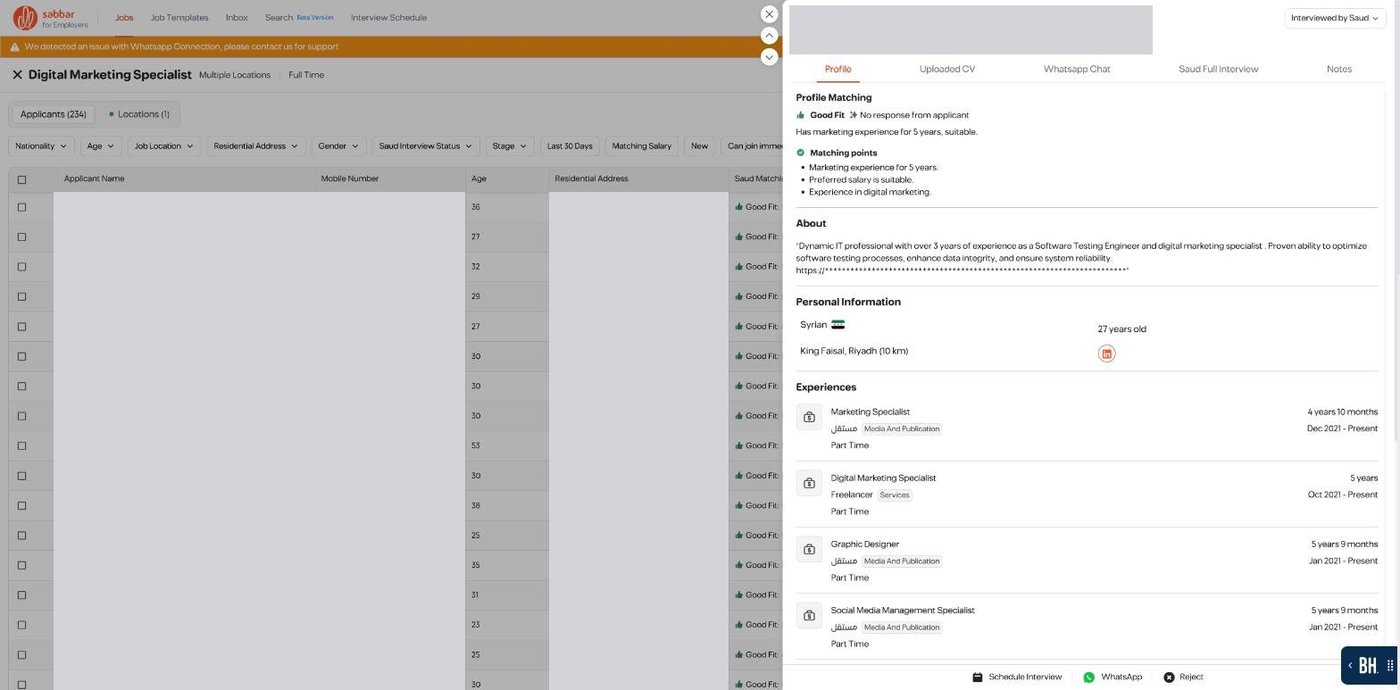
What comes with each candidate on the list?
Each candidate comes with five pieces of information that turn your decision into an evidence-based one.
- The fit verdict: Good Fit or Close Fit.
- Saud's summary: a short paragraph about the candidate.
- Matching points: which of your requirements they meet.
- Unmatched points: what is missing, so you can ask about it.
- The full transcript: every question and answer.
Alongside sits the CV itself: experience, skills, languages and the introductory video if there is one.
Where does the shortlist appear in your account?
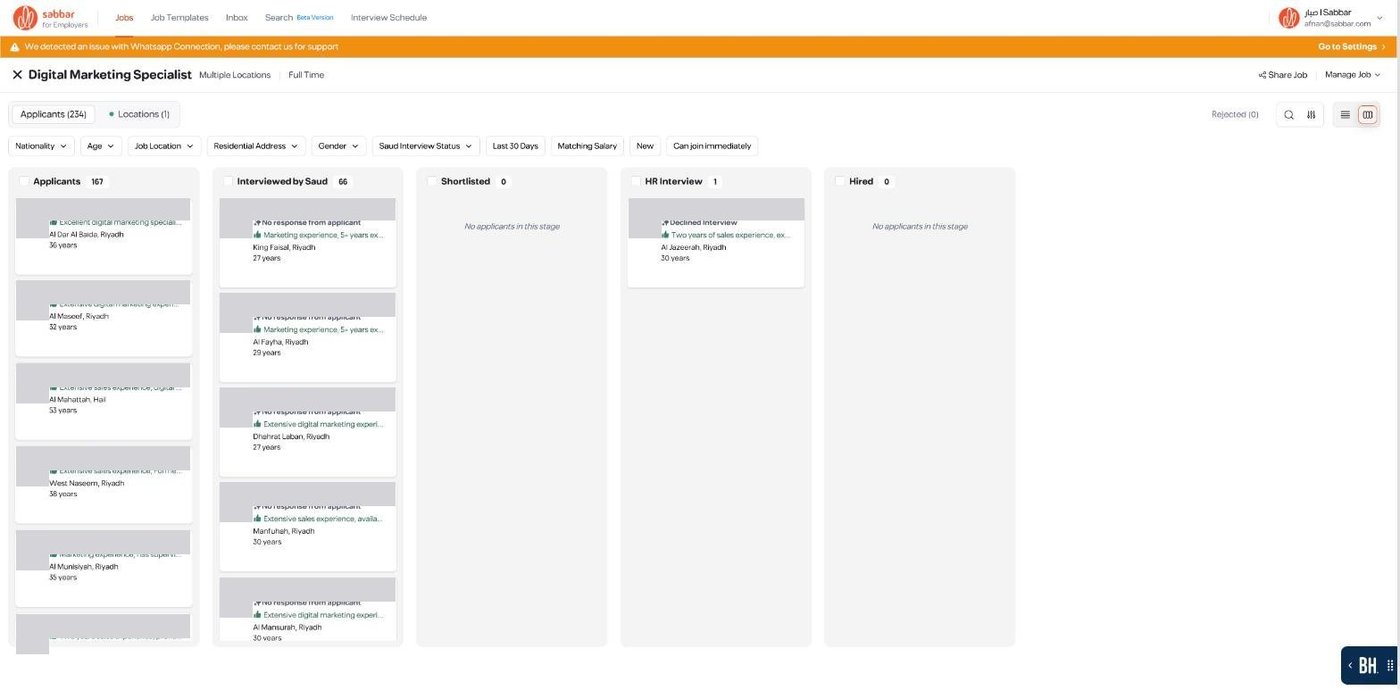
The shortlist appears on the hiring stages board in the Sabbar employer platform. The board is a set of columns, one per stage:
- Applicants: everyone who applied.
- Interviewed by Saud: those who completed the first interview.
- Shortlisted: those you picked for the final interview.
- Hired: the people you hired.
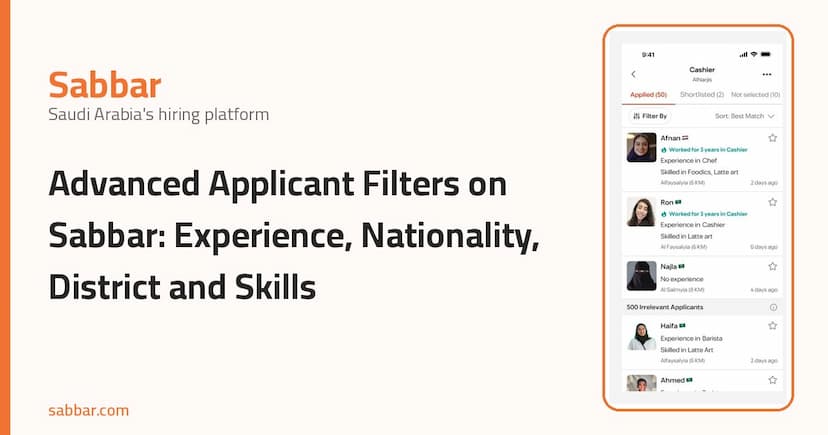
You can add custom stages and view applicants as a table or a board. In the Companies App the tabs are Applied, Shortlisted and Not selected.
How do you review the shortlist in fifteen minutes?
Review it in five organised steps.
- Start with Good Fit: sort by Best Match and open the top profiles.
- Read the notes before the CV: the summary and matching points give you the picture in seconds.
- Look at the unmatched points: trainable, or a core condition?
- Watch the introductory video: if the job is customer-facing.
- Move or dismiss: Shortlist or "Not a match". A dismissed applicant is not notified.
How many candidates belong on a shortlist?
The right number depends on the vacancies; a working rule is three to five candidates per opening.
- One opening: three to five candidates.
- Several openings for the same title: scale up, with a margin for those who withdraw.
- Frontline roles: allow a larger margin because withdrawal rates are higher.
What comes after the shortlist?
After the shortlist come contact and the final interview.
- You contact the candidate through Sabbar chat or a call.
- Saud schedules the interview around your availability and follows up before the slot.
- You hold the in-person interview and decide.
- You move the successful candidate to Hired.
The first-interview stage is explained in AI interviews on WhatsApp with Saud.
Is your team drowning in CVs every week? See Saud for employers and receive a ready list instead of a pile of applications.
Set your criteria before you open the list
A good shortlist starts before applicants arrive, when you separate must-haves from nice-to-haves. Without that, your judgment shifts from one candidate to the next.
- Must-haves: what the job cannot do without, such as availability for the required shift or point-of-sale experience.
- Nice-to-haves: what tips the balance between two candidates, such as an extra language or experience in the same sector.
- Trainable items: skills someone can learn in two weeks. Do not reject over them.
Write no more than three must-haves per job. More must-haves shrink the list without improving its quality. The requirements you enter in the post's fields are the same ones Saud builds his assessment on.
An illustrative example: from a long list to five candidates
This illustrates the filtering process; the scenario is for explanation only. A shift supervisor role at a café in Khobar attracts many applicants.
- After matching: some applicants show as Good Fit and a larger group as Close Fit.
- After the Saud interview: some Good Fits turn out not to want the evening shift, and some Close Fits reveal supervisory experience that was not clear in the CV.
- Manager review: the manager reads the notes and removes anyone who misses the two must-haves: supervisory experience and evening availability.
- The shortlist: five candidates remain, three Good Fits and two Close Fits with a trainable gap.
- The reserve: three more stay in an earlier stage in case one of the five withdraws.
Notice that the first interview moved some candidates up and others down. That is why the first rating alone is not enough.
Common mistakes in building a shortlist
- A list that is too long: fifteen candidates for one vacancy means you have not shortened anything.
- A list that is too short: one or two candidates leaves you hostage to a single withdrawal.
- Relying on the CV alone: the CV says what the candidate did, and the interview says whether they suit this job.
- Ignoring distance: an excellent candidate who lives far away may not finish the first month.
- Delaying the decision: a shortlist loses value every day, because its candidates are applying elsewhere.
- Criteria that shift mid-review: if you change a requirement after reading half the list, reread the first half.
How to contact shortlisted candidates
The first message to a shortlisted candidate should be specific and easy to answer. Use Sabbar chat and include four things.
- The job and branch: so the candidate knows which application you mean.
- The next step: an in-person interview or a trial shift, and how long it takes.
- Two proposed times: so they pick one instead of facing an open question.
- What to bring: such as an ID or a required certificate.
For example: "Hello, we reviewed your application for the shift supervisor role at the Khobar branch and would like to meet you. Would Sunday or Tuesday at 5 pm at the branch suit you? The interview takes half an hour."
What to do with those who did not make the list
Someone who missed the shortlist today may be the candidate for your next vacancy. Handle them in order.
- Strong Close Fits: keep them in an earlier stage as a reserve until hiring is complete.
- Clearly unsuitable: move them to Not Selected so your board stays clean.
- Suitable for another role: if you have another vacancy that fits, invite them to apply for it.
Get a ready shortlist for every role
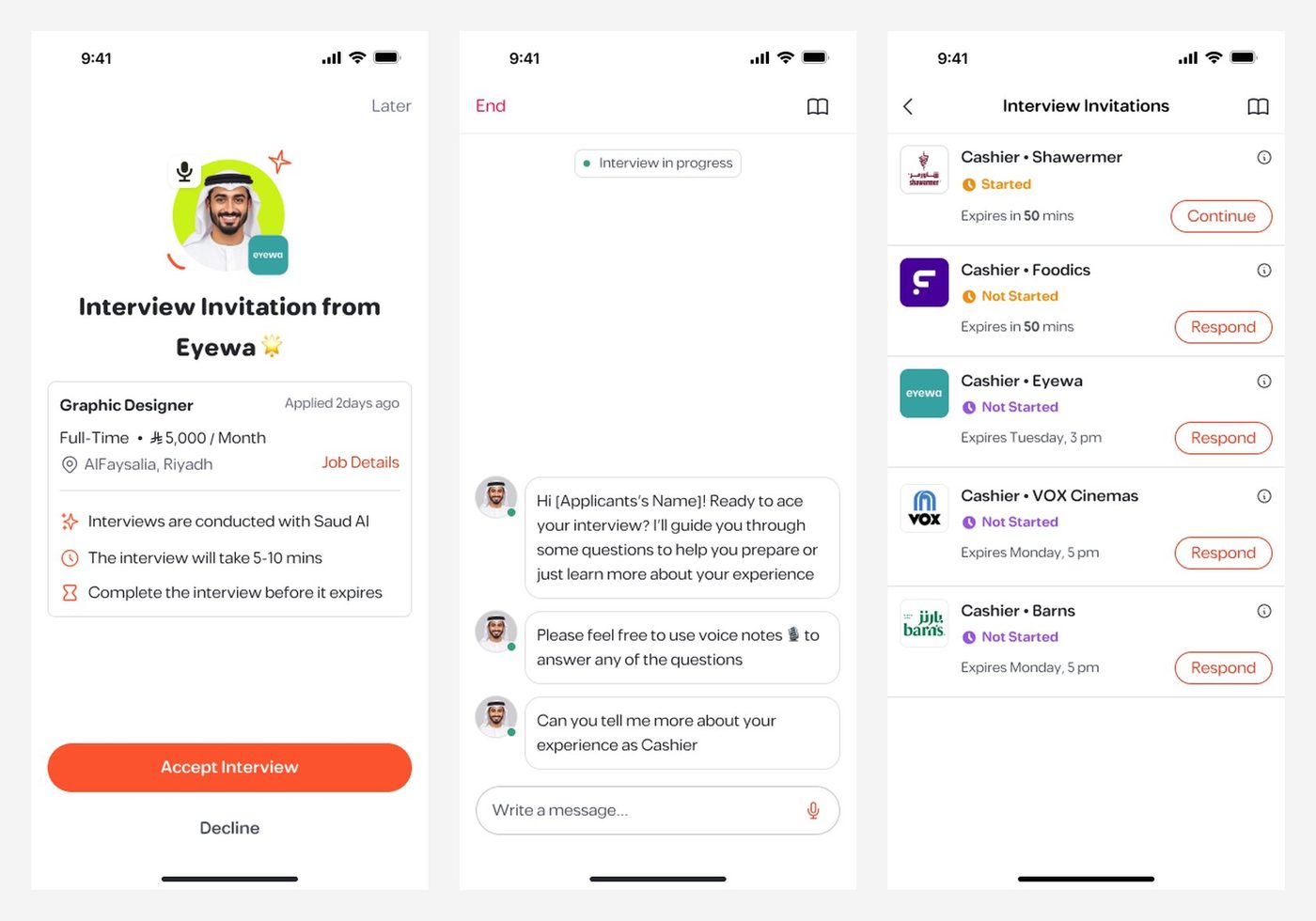
Saud matches, interviews and writes his notes, and you start directly from the best candidates. Book a demo and see hundreds of applications become a short, clear list.
Summary
Shortlisting candidates with Saud rests on matching, a first interview and a documented verdict. Each candidate comes with enough to decide in minutes, and you move the best to the final interview from a single board.
FAQs about shortlisting with Saud
Does Saud choose the shortlist for me?
Saud rates and ranks; you are the one who moves a candidate to the Shortlisted stage.
Can I review people who were not rated Good Fit?
Yes. All applicants stay on your list, and you can open any profile.
Does the applicant know they were dismissed?
No. An applicant you mark "Not a match" is not notified.
Can I add my own hiring stages?
Yes. You can add custom stages next to the fixed ones; this is part of the Manage Job tools on Enterprise.
Is the shortlist available on mobile?
Yes. The Shortlisted tab is in the Sabbar Companies App.