The first thing a job seeker looks at in any post is the salary. If it is missing they hesitate; if it is lower than expected they move on. The salary in a job posting is a small decision that shapes how many people apply and how good they are.
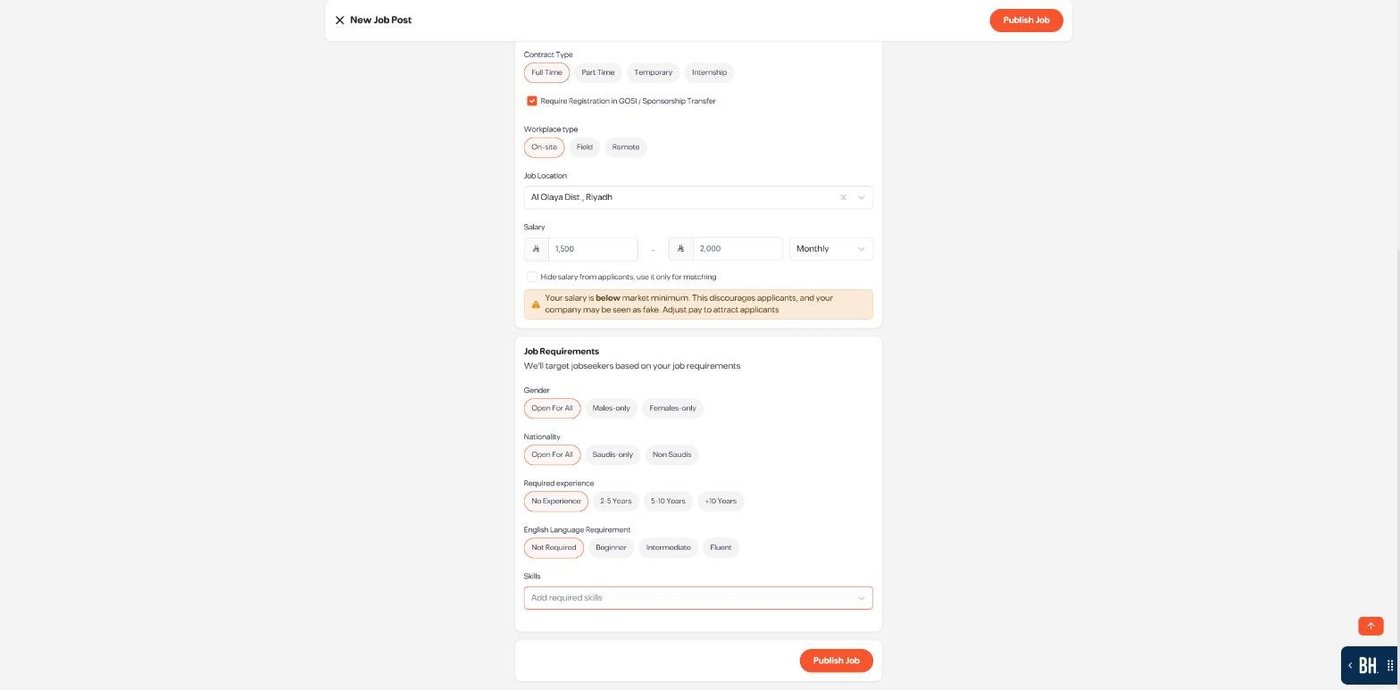
Sabbar has a salary field, a warning when pay is below the market, and an option to hide it. This article explains when to show it, when to hide it, and how the fair-pay warning works.
What you will learn
- How to enter salary in a Sabbar post.
- What the fair-pay warning is and what it means for you.
- When hiding the salary helps and when it hurts.
- How to set a salary that attracts the right applicant.
How is salary entered in a job posting on Sabbar?
Salary in a job posting on Sabbar goes in a dedicated field when you create the post, in one of three forms.
- Monthly: for permanent full-time jobs.
- Daily: for temporary work and events.
- Hourly: for part-time and flexible work.
The salary shows on the job card and page and is also used in matching applicants. The employer sets it; Sabbar does not.
Why does salary in the post matter?
- It settles the decision to apply: the job seeker knows from the start whether the job suits them.
- It saves both sides time: no interviews that end at the salary question.
- It builds trust: a clear post looks serious.
- It feeds matching: the offer is compared with what the job seeker expects.
- It reduces drop-outs: someone who applied knowing the pay is less likely to withdraw.
What is the fair-pay warning?
The fair-pay warning is a message shown to the employer when the pay entered is below the market minimum for that role. Its purpose is to tell you before publishing that the offer may not attract applicants.
Three things to know:
- It does not block publishing: you can finish the post as it is.
- It is a warning, not a violation: it draws your attention; it does not judge you.
- It protects you from a post with no applicants: which is the bigger cost.
Try the salary field and its warning yourself. Post your job on Sabbar for free and see how salary affects applicant numbers.

Sabbar is Saudi Arabia's leading local hiring platform
The go-to place for job seekers and employers across every sector in the Kingdom, with more than 1.5 million job seekers and thousands of companies
Get started with Sabbar today!
What should you do if the fair-pay warning appears?
You have four practical options.
- Check the figure: did you enter basic pay only and forget allowances?
- Raise the offer: if your budget allows.
- Spell out the benefits: housing, transport, meals, commission, in the description.
- Adjust the job: fewer hours or part-time to fit the pay.
If you keep the pay as it is, expect fewer applicants and check the result after 48 hours.
What is the Hide salary option?
Hide salary keeps the figure out of sight for job seekers and uses it for matching only. You enter the real salary, and the system uses it to compare with applicants' expectations without showing it.
You keep matching accuracy even when you do not advertise the number.
When does hiding the salary help?
- Pay that varies with experience: which you want to discuss at interview.
- Supervisory or management roles: where the package has many parts.
- Internal sensitivity: you do not want current staff to see the new offer.
- Direct competition: you do not want to reveal your pay structure.
When does hiding the salary hurt?
- Frontline roles: cashiers, baristas and sales associates decide on pay first.
- Part-time and hourly work: the number is the key fact.
- A crowded market: posts that state salary get ahead.
- When you need many people quickly.
The working rule: for recurring, high-volume roles, show the salary; for special positions, hide it if you must.
How do you set a suitable salary?
- Know the market: watch similar posts in your city and sector.
- Count the whole package: basic pay, allowances and commission.
- Consider city and district: costs differ.
- Consider shifts: nights and holidays deserve more.
- Mind Saudization: wage is part of how a Saudi employee is counted in Nitaqat. See the Saudization hiring guide.
- Listen to the fair-pay warning.
How do you write the salary clearly?
- Enter the actual figure, not "attractive salary".
- Choose the right unit: monthly, daily or hourly.
- Mention allowances and commission in the description.
- Do not post one number and offer less at interview.
- Say if the salary changes after probation.
How does salary affect matching?
When applying, a job seeker is asked for their expected salary if the job needs it, and the system compares it with yours.
- On the web platform a "matching salary" filter shows those whose expectations fit your offer.
- In the Companies App there is a salary range filter.
- In Candidate Search there is a salary expectation filter.
See Matched candidates within 24 hours.
Common mistakes with salary in posts
- "Depends on experience" with no number at all.
- Entering the total package as if it were basic pay.
- The wrong unit: a monthly figure in the daily field.
- Ignoring the fair-pay warning, then wondering about low applicant numbers.
- A salary in the post that differs from the contract.
Who pays the salary, and who documents it?
The employer pays the employee directly, and the salary is written into the contract documented on Qiwa. Sabbar is a hiring platform that shows the salary as you entered it; it does not pay salaries or document contracts. See Sabbar FAQs for Saudi employers.
How does salary fit with the rest of the post?
Salary works best next to a clear description and a complete company profile.
- Write the description with Saud. See How to write a job description in minutes with Saud.
- Complete your profile. See Company profile on Sabbar.
- State shifts and district.
Salary set and want to see who fits it? See Sabbar's plans and start contacting the matches.
An illustrative example: the same post with three ways of showing salary
This illustrates the effect of how salary is presented. Any figures are hypothetical. A café in Riyadh advertises for a barista.
- The first way, no salary: the post says "attractive salary". Few people apply, the first question in every chat is the figure, and some drop out once they hear it.
- The second way, base pay only: the base salary is entered with no mention of the transport allowance and incentives. The fair-pay warning appears, and the offer looks weaker than it really is.
- The third way, the full picture: the salary goes in its field, and the description mentions the transport allowance, meals and sales incentive. The applicant sees what they would actually receive.
The café and the cost are the same in all three. The difference is that the third presented the offer as it is, and so attracted people the offer suits.
How to set a realistic salary for your job
Setting a salary is not guesswork. Follow these steps before you enter the figure.
- Look at similar posts: the same title in the same city. What do others offer?
- Ask your current staff: what made them accept, and what makes colleagues leave?
- Work out the whole package: base, allowances, incentives and benefits in kind.
- Consider location and shift: a distant branch or a night shift usually needs a higher offer.
- Check the Saudization counting conditions: if the role is for a Saudi national, pay affects how they are counted.
- Listen to the fair-pay warning: if it appears, it is a signal from the market before you publish.
How to write the benefits next to the salary
The salary is one number, and benefits are what tip your offer over a similar one. Write them clearly in the description.
- Cash allowances: housing and transport, stating whether they are inside the written figure or on top of it.
- Incentives: sales commission or a performance bonus, and briefly how it is calculated.
- Benefits in kind: meals, uniform, transport, staff discount.
- Medical insurance.
- Training and promotion: especially for fresh graduates.
- Days off and leave: something many people look for.
The rule: do not list a benefit you will not actually provide. A gap between the post and reality is the fastest route to an early resignation.
How to talk about salary with a candidate
Whether you showed the salary or hid it, the conversation will come. Handling it well is part of a successful hire.
- If the salary is shown: confirm it in the first chat and explain its components.
- If it is hidden: give the range early, before the in-person interview, so nobody's time is wasted.
- If the candidate asks for more: ask why, compare it with their experience, and be clear about your budget.
- Promise nothing that is not approved: the figure you say in chat must appear in the written offer.
- Put the final offer in writing: the salary, its components and the pay date.
Common mistakes in writing the salary
- "Attractive salary" with no figure: it means nothing to a job seeker.
- A figure higher than the real one to attract applicants: it comes out at interview and you lose the candidate's trust.
- A very wide range: a big gap between the two ends makes every applicant expect the top.
- Leaving out allowances: your offer looks weaker than it is.
- Hiding the salary for a frontline role: applications drop sharply.
- Dismissing the warning without checking: you may have entered base pay only.
State a clear salary and attract better-suited applicants
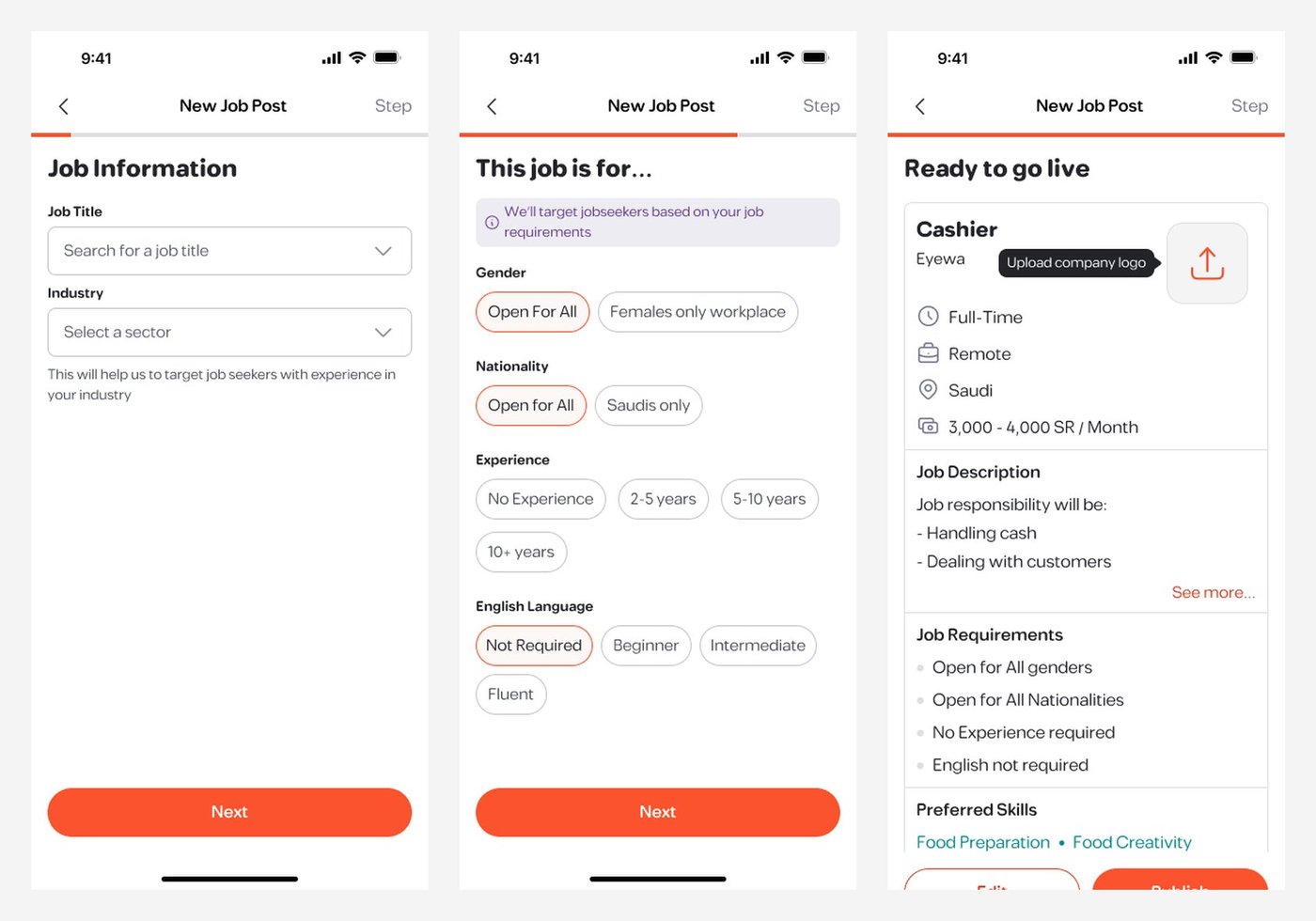
A clear salary, a warning if it is below the market, and an option to hide it when needed. Post your job for free and see whose expectations fit your offer.
Summary
Stating the salary in a job posting attracts better-suited applicants and reduces drop-outs. On Sabbar you enter it as monthly, daily or hourly, see a fair-pay warning if it is below the market without being blocked, and can hide it and use it for matching only.
FAQs about salary in job posts
Is entering a salary required on a Sabbar post?
You enter the salary when creating the post, and can choose to hide it from job seekers and use it for matching only.
Does the fair-pay warning block publishing?
No. It is only a warning and does not block publishing.
Does Sabbar set the salary?
No. The employer sets it.
Can I enter an hourly salary?
Yes. Salary can be monthly, daily or hourly.
Does hiding the salary reduce applicants?
For frontline roles, usually yes, because job seekers decide on pay first.